
Member Portal I Operations

Animal Ethics

Ethical, legal and operational responsibilities for schools keeping or using animals for educational purposes.
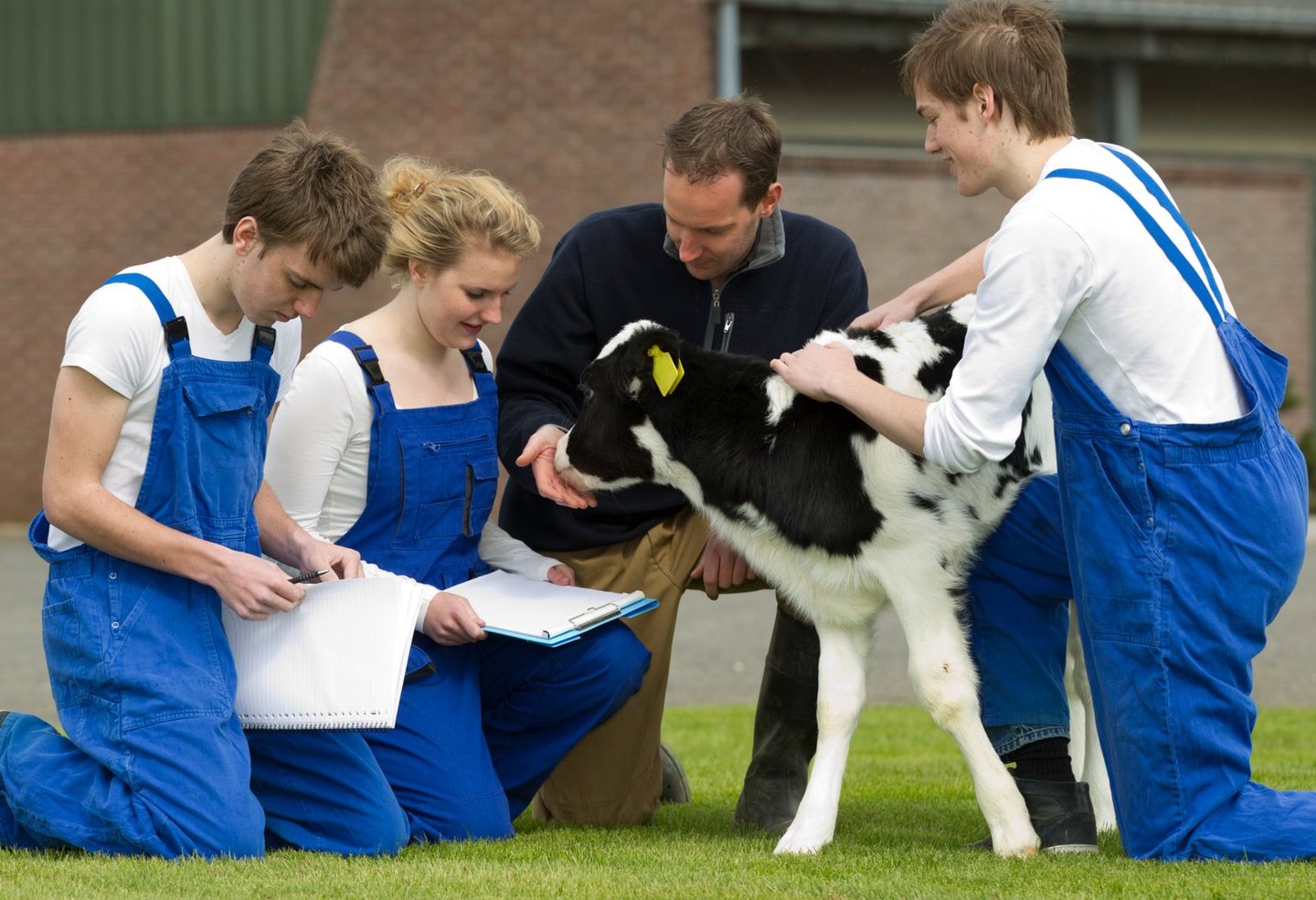

agriculture students iStock-175401059

Schools that keep or use animals on site have clear responsibilities under the Animal Welfare Act 1985 (SA) and associated regulations and codes of practice. Schools must ensure animals are treated humanely and protected from harm, distress, and neglect. This includes providing appropriate housing, nutrition, veterinary care, supervision, and handling by trained staff and students. Animals must only be used for legitimate educational purposes, and activities must align with approved animal welfare standards, including the Australian Code for the Care and Use of Animals for Scientific Purposes, where applicable. Schools are also responsible for ensuring staff and students understand their duty of care and for responding promptly to illness, injury, or welfare concerns.

Pink and Thomas 2015

Animal Ethics Focus Person

Schools that keep or use animals onsite must have a nominated Animal Ethics Focus Person who has undertaken Compass ANZCCART Training. The name, position and contact email of the Animal Ethics Focus Person must be submitted to animalethics@ais.sa.edu.au.

The Non-Government Schools Animal Ethics Committee (NGSAEC)

This Committee plays a critical role in supporting Independent and Catholic schools to meet these obligations. The Association of Independent Schools South Australia (AISSA) and Catholic Education South Australia (CESA) jointly manage the NGSAEC.

The Committee reviews and approves animal use proposals, provides advice on ethical and welfare considerations, and ensures activities comply with legislative requirements and relevant codes.

Through guidance, monitoring and professional support, the NGSAEC helps schools balance educational outcomes with high standards of animal welfare, supporting schools to confidently and responsibly fulfil their obligations while maintaining ethical practice.

NGSAEC approval required

If NGSAEC approval is required, schools must ensure that all of the requirements for Principal approval are met and then submit an Application Form for the use of Animals for Educational Purposes to the NGSAEC at animalethics@ais.sa.edu.au. All applications must demonstrate clear curriculum links, include quality photographs, and meet the Committee’s standards.

Applications for approval to keep animals in schools

Schools intending to keep animals must determine the required approval for the proposed program and submit an Application Form for the use of Animals for Educational Purposes for NGSAEC approval if required at least six months before the existing approval expires or the new activity begins.

NGSAEC approvals are valid for three years. To ensure continuity, schools should apply for renewal at least six months before expiry.

Applications must be submitted to animalethics@ais.sa.edu.au. The Committee meets once per term, so approval can take up to six months.
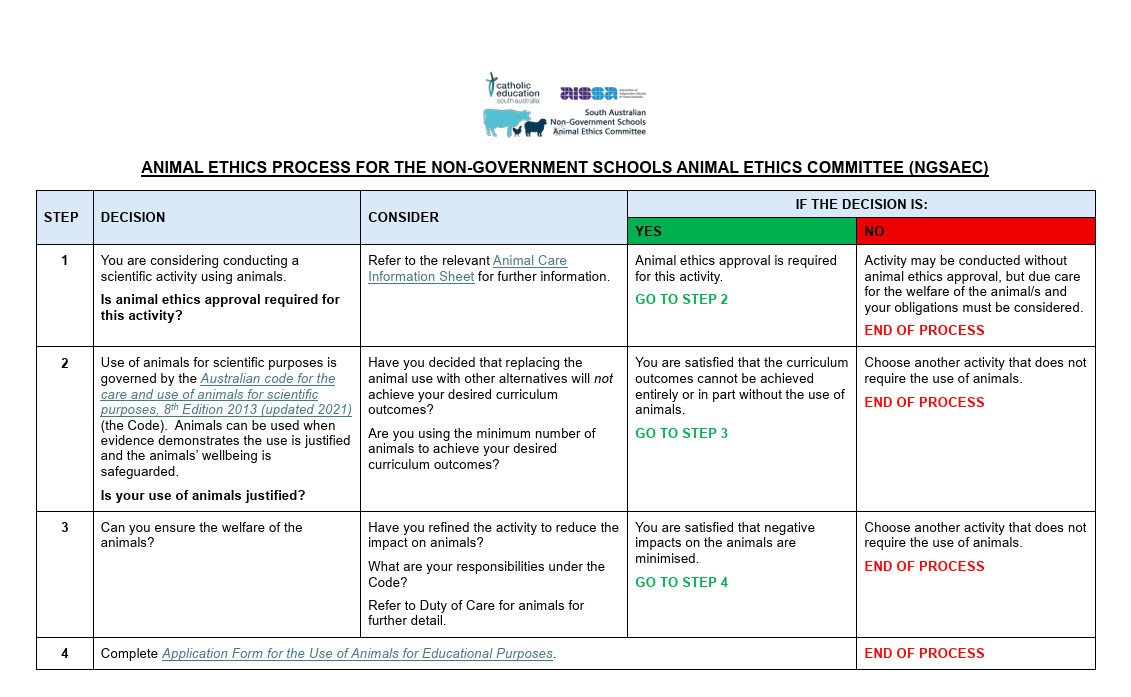

NGSAEC process

Approval process

Review the Animal Care Information Sheet for the animal species you are seeking approval for. The ACIS provides guidance on whether the activities require approval from the Principal only or must also be submitted for NGSAEC approval before the activity begins. If an activity is not listed in the ACIS schools should complete an application form and seek NGSAEC approval.

Principal approval only required

If Principal approval only is determined, schools must ensure the following:

NGSAEC approval required

If NGSAEC approval is required, schools must ensure that all of the requirements for Principal approval are met and then submit an Application Form for the use of Animals for Educational Purposes to the NGSAEC at animalethics@ais.sa.edu.au. All applications must demonstrate clear curriculum links, include quality photographs, and meet the Committee’s standards.

Example applications to the NGSAEC

The following example applications and document may assist schools in preparing and submitting their own applications to the Committee. Schools are encouraged to contact the NGSAEC Executive Officer for support with preparing applications.

Animal Care Information Sheets

The NGSAEC Animal Care Information Sheets provide comprehensive guidelines for animal care, covering handling, training, health management, and transportation. They also provide guidance on whether proposed activities can be approved by the Principal alone or require NGSAEC approval.

support dog iStock-1128755728

Animal Care Information Sheets

The NGSAEC Animal Care Information Sheets provide comprehensive guidelines for animal care, covering handling, training, health management, and transportation. They also provide guidance on whether proposed activities can be approved by the Principal alone or require NGSAEC approval.

Example applications to the NGSAEC

The following example applications and document may assist schools in preparing and submitting their own applications to the Committee. Schools are encouraged to contact the NGSAEC Executive Officer for support with preparing applications.

support dog iStock-1128755728

Notification from Veterinary Practice re School as Client

The veterinary practice at which the school is a client must complete the form. This provides the Committee with assurance that the Practice is ready to service the school’s animals when required.

Therapy/Support Dogs

Research into the effects of therapy or support dogs in schools shows a range of benefits, including:

  • Reduction in stress and anxiety
  • Increased school attendance
  • Improvements in confidence and self-esteem
  • Improvements in learning outcomes
  • Enhanced relationships with peers and teachers.

Consideration must also be given to the dog’s welfare, and the school has a responsibility for maintaining the dog’s health and well-being.

We encourage you to read the attached example Wellbeing Dog Policy , which may assist you and your school before using a therapy dog at your school.

Living Eggs and Hatching Program

The Living Eggs Program offers invaluable information about the incubation and hatching of eggs for lifecycle projects. Schools should use the Living Eggs Program, which provides clear procedures, collects the chicks for re-homing, and provides guides for different levels of schooling.

Orf Virus (Scabby Mouth)

The following link provides valuable information regarding Scabby Mouth in sheep.

Department of Primary Industries and Regions - Sheep Disease Farmers Guide

further support

Recommended useful links

References


Animal Welfare Act 1985 (SA). (1985). Government of South Australia. [Accessed 30 January 2026]

Australian and New Zealand Council for the Care of Animals in Research and Teaching (ANZCCART). (n.d.). Compass training program. https://anzccart.adelaide.edu.au/compass [Accessed 30 January 2026]

Australian and New Zealand Council for the Care of Animals in Research and Teaching (ANZCCART). (n.d.). ANZCCART resources. https://anzccart.org.au [Accessed 30 January 2026]

Commonwealth of Australia, National Health and Medical Research Council. (n.d.). Australian code for the care and use of animals for scientific purposes. [Accessed 30 January 2026]

Department of Primary Industries and Regions South Australia. (n.d.). Sheep disease—Farmers guide (Orf virus / scabby mouth). [Accessed 30 January 2026]

Department of Energy, Environment and Climate Action. (n.d.). Animal welfare resources. [Accessed 30 January 2026]

Flinders University. (n.d.). Standard operating procedure for the use of marine and aquaculture facilities. [Accessed 30 January 2026]

Flinders University. (n.d.). Standard operating procedure for working with fish. [Accessed 30 January 2026]

Service Animals Australia. (n.d.). Therapy dogs in school settings. [Accessed 30 January 2026]

Australian Government. (n.d.). Aquatic animal welfare guidelines. [Accessed 30 January 2026]

Living Eggs. (n.d.). Living Eggs hatching program. https://www.livingeggs.com.au [Accessed 30 January 2026]

content maintained by:

Elizabeth Sexton, Head of Workplace and Human Relations

last updated:

January 2026